Melodies you did not write.
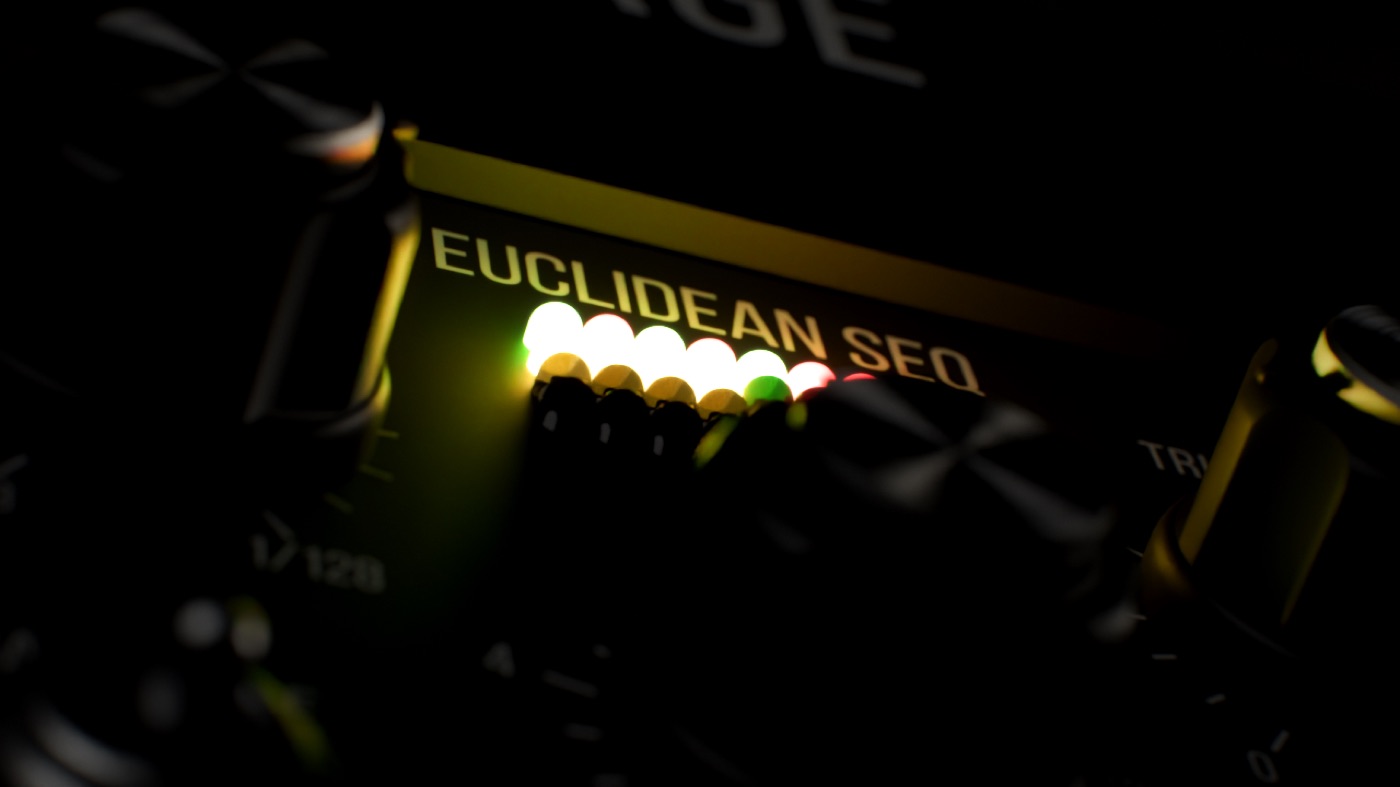
DRONAGE is built for generative composition. The euclidean sequencer decides when each track strikes, and six of its own knobs take modulation themselves. Set a sample and hold LFO on a sequenced track’s pitch and the rhythm starts playing a line through the scale, every note in key: 65 scales, from the modes to twenty microtonal tunings.
The subtler recipe is drift: eight global LFOs with their own shapes and rates, triplet and dotted cycles against straight ones, free-running hertz against the tempo. Stack a few slow ones on a patch and the piece stops repeating itself.
Four tracks, keyboard optional.
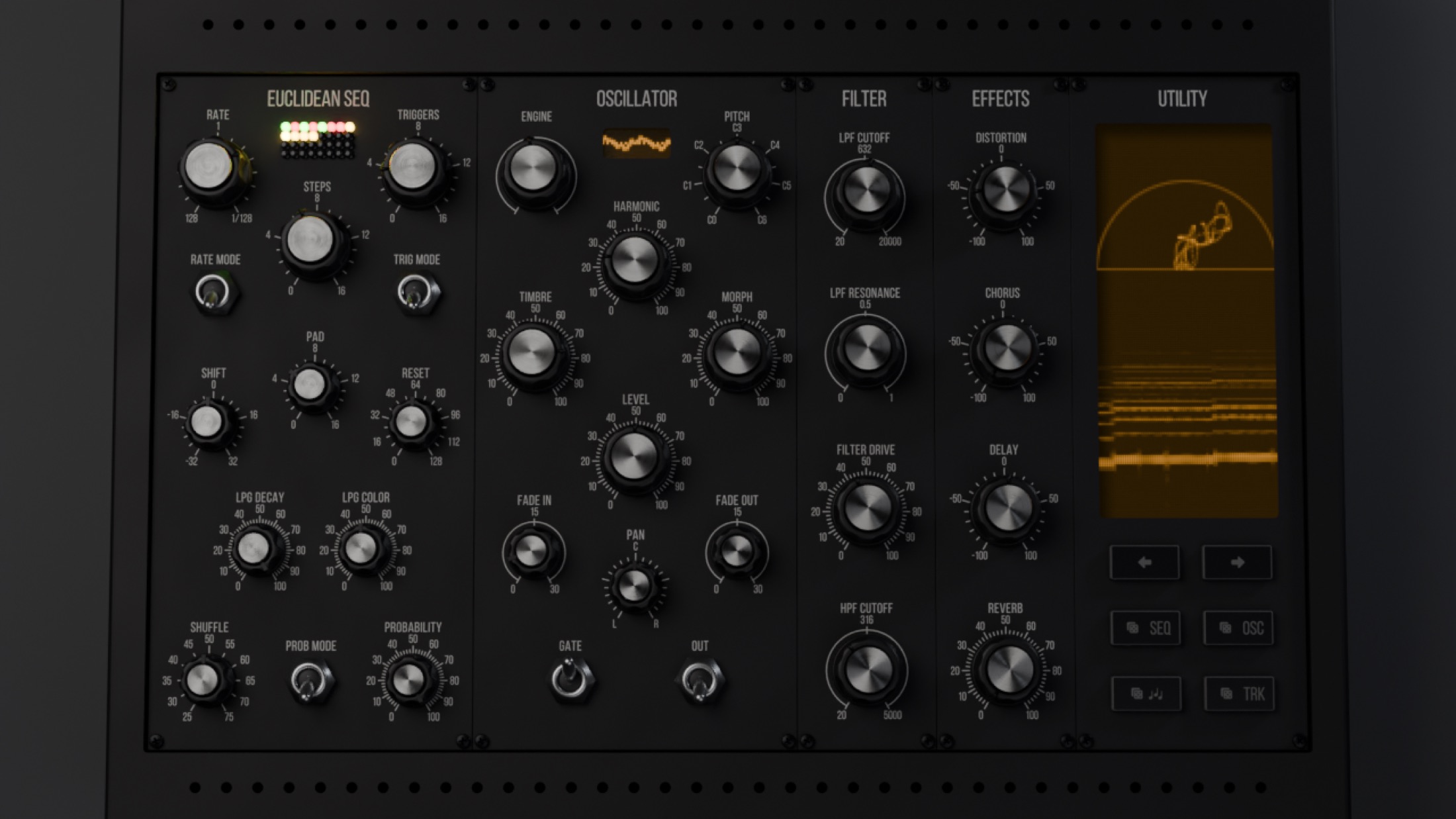
Each track is a voice with its own filter, distortion, chorus and euclidean sequencer. Open a track’s gate and it fades in, close it and it fades away, as a drone or as a rhythm. MIDI plays it too, and in the standalone, Mac or iPad, a hardware keyboard runs the whole top panel and more. The face is the invitation: knobs, switches and screens drawn like real hardware.
35 engines
Virtual analog, waveshaping, FM, grain, speech, string and twenty nine more, each with its own controls.
1 panel
One tall rack of knobs and switches, scrolled like a case, with quick jumps always on the top panel.
4 scenes
Each scene snapshots the whole instrument. Switching between them is how you play it.
8 LFOs
Global, tempo-synced or free running, sine to seeded sample and hold, and any of them can move any track.
24 destinations
The matrix keeps the eight essentials in reach; the CV sequencer and the XY pads go all the way to twenty four, euclid knobs included. No choice paralysis from the get-go, all the depth when you dive.
4 voices
OMNIPOLY spreads held MIDI notes across the tracks, up to four voices at once.
Chance with a memory.
Every track carries four dice: a new pattern, a new voice, a whole new track with filter and effects, or a melody rolled straight into an LFO. The rolls follow rules that keep the result playable, they never open a gate or touch a level, and each one is a single undo step. Roll, listen, undo, roll again.
Generative does not have to mean luck. The melody die rolls a seeded loop: the instrument’s seed and the LFO’s own, 1,048,576 combinations, repeating at a set length, a melody you can learn and come home to. The roll is never the same twice, but what it lands on plays the same way every time.